The REAL Feng Shui origin : Goo Pu, Yang Junsong and the 3 Feng Shui

The REAL Feng Shui origin : Guo Pu, Yang Junsong and the 3 Feng Shui

Origin of Feng Shui: history, transmission, and legacy of Yang Gong Feng Shui.

When people talk about Feng Shui, we often hear the same explanations: the meaning of the term Feng Shui, “wind and water,” references to the great Chinese dynasties, or the idea of an ancient art meant to harmonize living spaces.

These explanations are found everywhere, in books as well as on the Internet. Yet they often remain general and incomplete.

To truly understand the origin of Feng Shui, one must return to its historical roots, its foundational texts, its masters, and above all the way this art has been transmitted in China over the centuries. Because originally, Feng Shui was not simply a method of well-being or interior decoration; it was a profound body of knowledge about the relationships between human beings, their dwellings, and their environment.

What does Feng Shui really mean ?

Feng Shui is often presented as an ancient Chinese art associated with luck, prosperity, and harmony. In some traditional definitions, it is described as a divinatory practice used to attract favorable influences and ward off negative ones.

But this definition is reductive.

At a deeper level, Feng Shui is the study of the interactions between a place, its natural environment, and the human beings who inhabit it. It applies to both dwellings and burial sites, which Chinese tradition distinguishes as Yang houses (places of the living) and Yin houses (places of the deceased).

Feng Shui is therefore not limited to the interior arrangement of a space. It is прежде all based on observing the land, forms, orientations, flows, and the energetic balance of a place.

The historical origins of Feng Shui in China.

The history of Feng Shui dates back to ancient China. According to tradition, its principles gradually developed over several historical periods, particularly during the Han, Jin, Tang, and Song dynasties.

However, when looking for a clearly identified foundational text, one name stands out: Guo Pu.

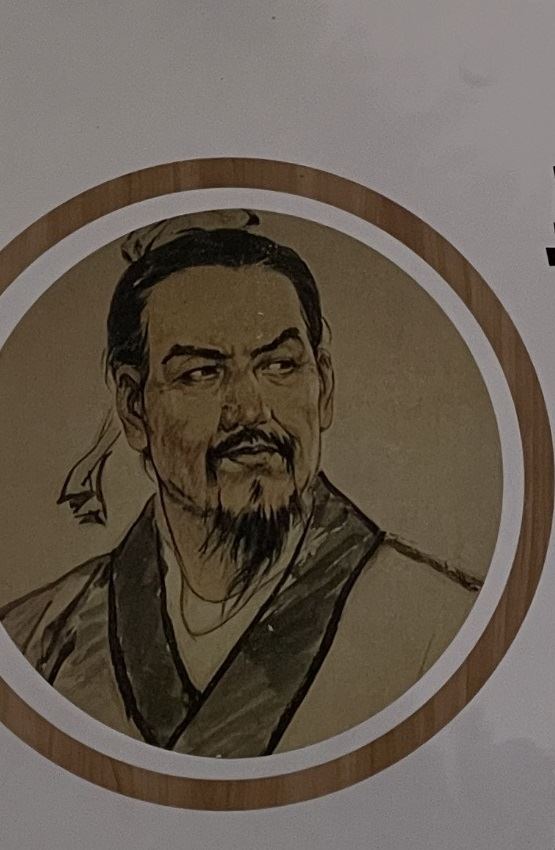
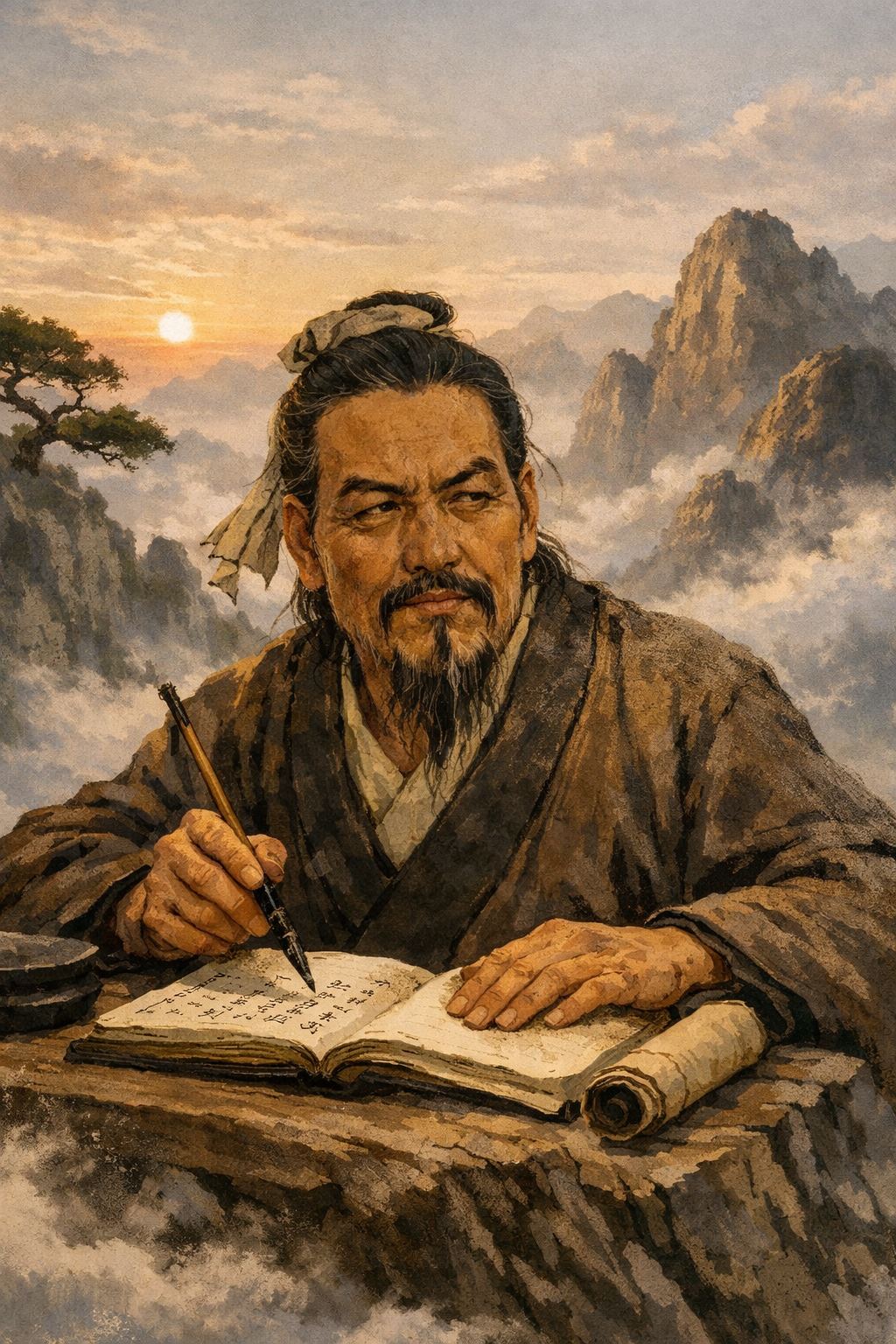
Guo Pu, who lived between 276 and 324, is considered one of the first great theorists of Chinese Feng Shui. He is credited with writing the Zang Shu, generally translated as the Book of Burial or Book of Funerals. This work is often regarded as one of the earliest major texts devoted to Feng Shui, particularly its funerary dimension—what is known as Yin Feng Shui, the Feng Shui of tombs.

It is within this context that a now-famous formula appears: “Qi disperses with the wind and stops at the boundary of water.” This idea alone captures an essential part of traditional Feng Shui logic: understanding how invisible flows circulate, dissipate, or concentrate within a given environment.

Guo Pu and the Book of Burial: a foundational text.

The Zang Shu holds a central place in the history of Feng Shui. It is not a modern manual, but a classical text—rare and difficult to access—that served as the foundation for a significant part of Chinese geomantic thought.

This book sets out the fundamental principles governing the relationship between topography, natural forms, water, wind, and the placement of burial sites. It reflects a time when Feng Shui was primarily concerned with the relationship between the dead, the living, and the land.

In this tradition, the choice of a location was never left to chance. It had to follow a precise logic, based on careful observation of the landscape and an understanding of natural dynamics.

Yang Jun Song: the master who transmitted Feng Shui.

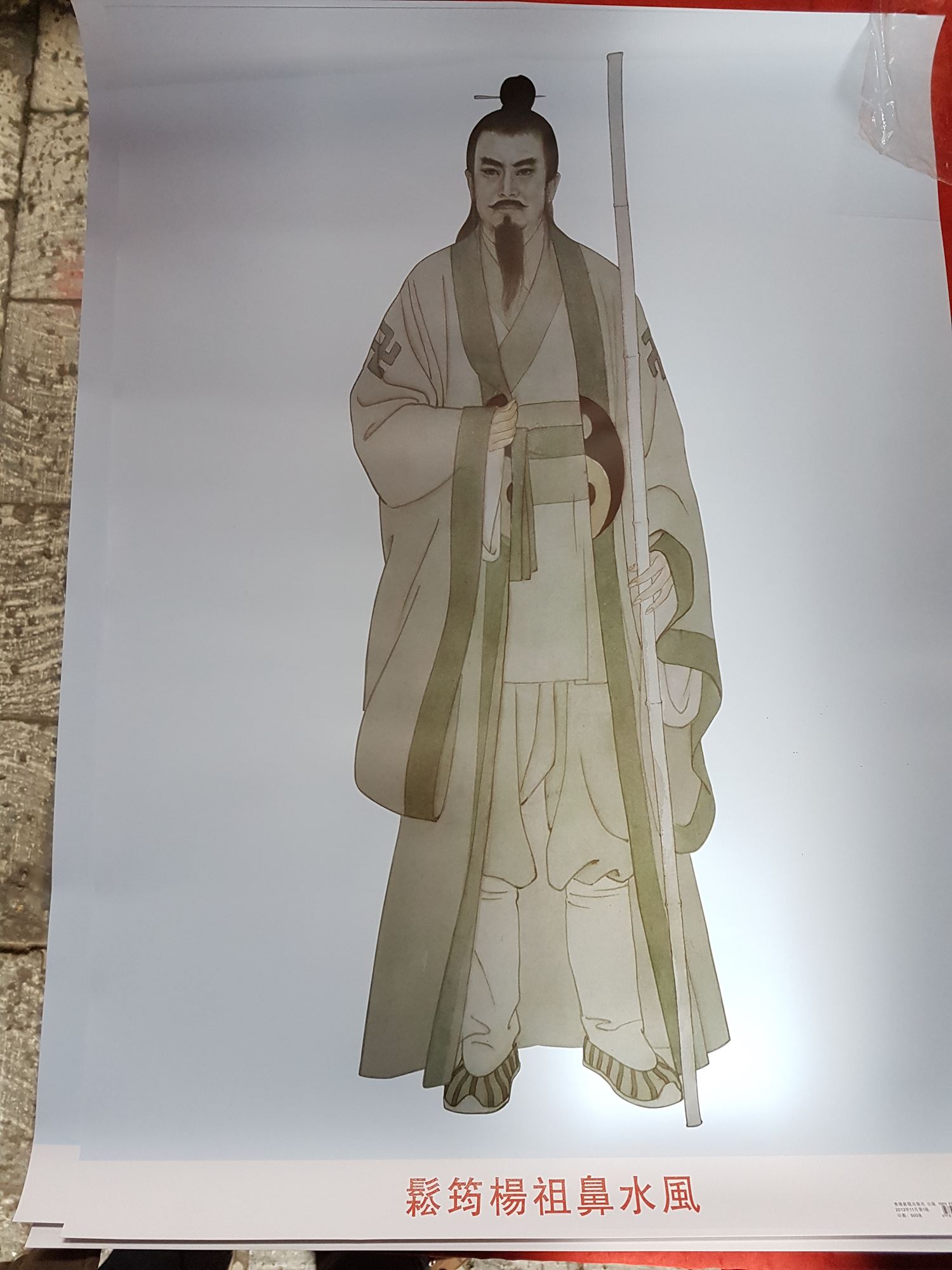
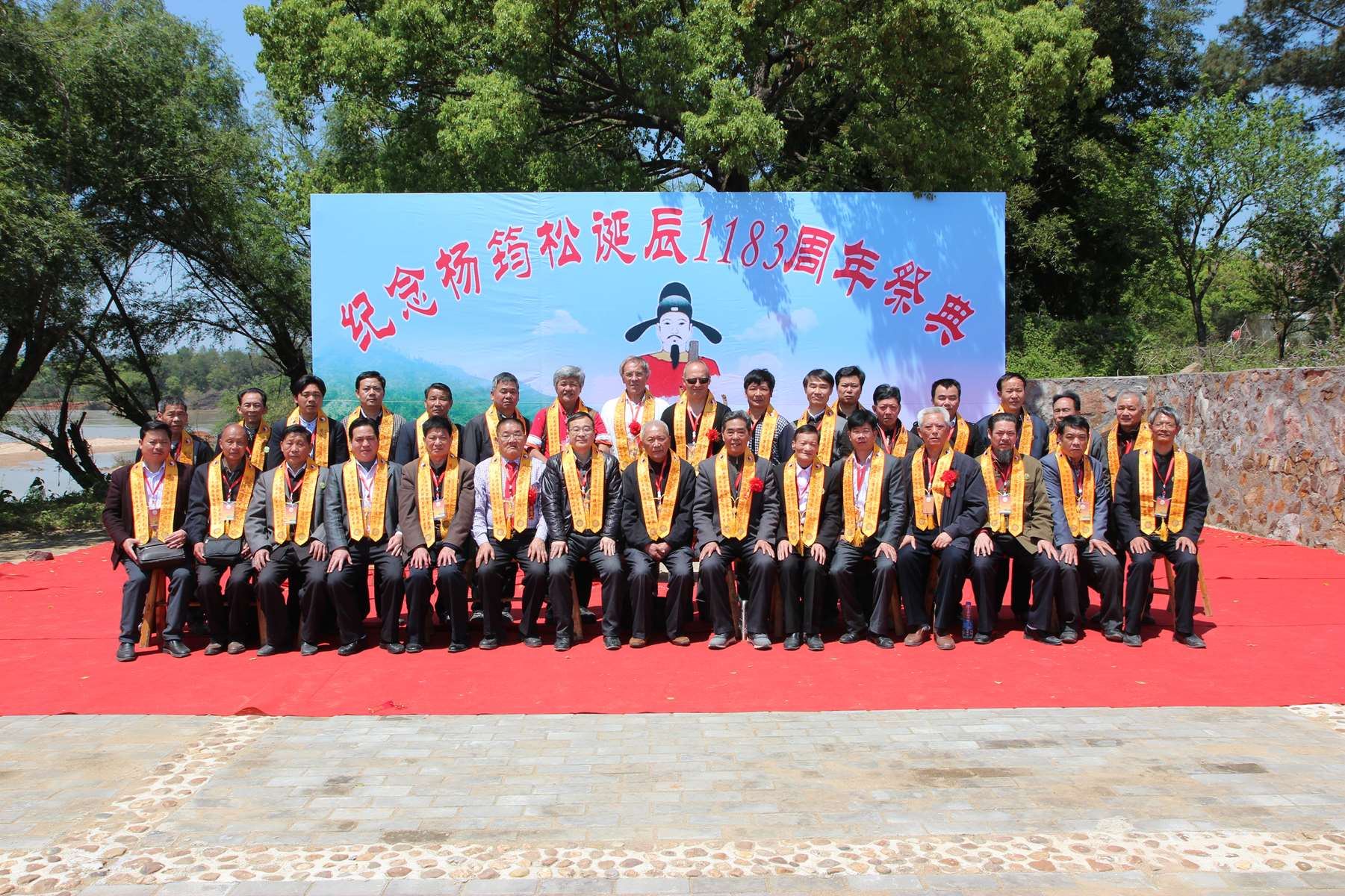
If Guo Pu is a foundational figure, Yang Junsong holds an equally essential place in the history of Chinese Feng Shui.

At the end of the Tang dynasty, Yang Junsong is said to have inherited ancient teachings, deepened them, structured them, and made them more practical. In the Yang Gong Feng Shui tradition, he is recognized as the master who connected theory to practice and who greatly contributed to transmitting this art beyond the imperial circle.

He is also associated with the development of the Feng Shui compass and with a more precise formalization of methods for analyzing landforms and orientations.

According to accounts passed down through the lineage, Yang Junsong held an important position related to geography within the imperial court. During the turmoil at the end of the Tang dynasty, he is said to have left the capital in order to preserve certain bodies of knowledge and texts related to imperial geomancy.

This transmission marks a major turning point: Feng Shui, which had until then been reserved for an elite close to power, began to move beyond the strictly imperial sphere.

San Liao: a central place in the transmission of Yang Gong Feng Shui.

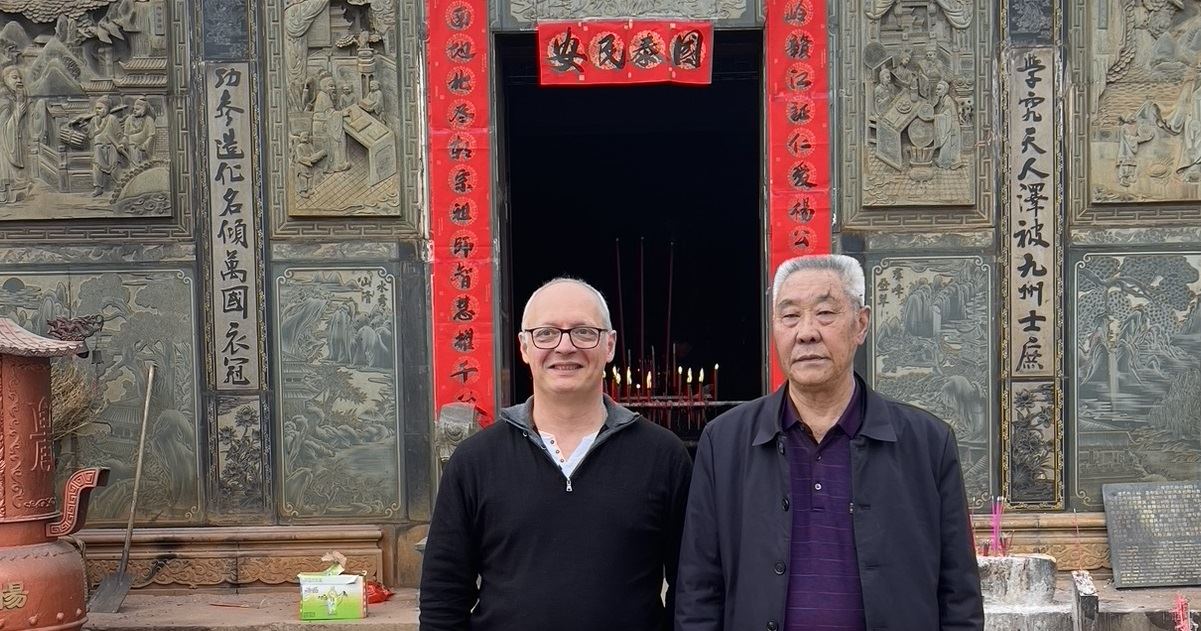
In the history of Yang Gong Feng Shui, the village of San Liao in China holds a special place. It is considered one of the key centers for the transmission of this tradition.

The lineage states that Yang Jun Song passed his teachings on to several disciples, including Liu Jiang Dong and Zheng Wen Can. Another major figure in this tradition, Liao Yu, is also associated with this early transmission.

It was around this lineage that the main branches of Yang Gong Feng Shui developed. Even today, San Liao remains a reference place for those who wish to study this teaching at its source, particularly with the still-recognized family lineages, such as the Liao and Zheng families.

Imperial Feng Shui and Folk Feng Shui.

Originally, Feng Shui was not accessible to everyone. It was closely connected to political power, the elite, and the imperial court. This is why Yang Gong Feng Shui is sometimes referred to as the Feng Shui of the emperors.

According to this tradition, this knowledge was used for major projects, whether imperial sites, palaces, or tombs. It was a restricted teaching, transmitted with caution within a very controlled framework.

Over time, other forms of Feng Shui developed. Some methods, more accessible in nature, were spread to a wider audience. Among them is Ba Zhai, often presented as a simplified or popularized system, designed to meet less elite needs.

Later, during the Ming and Qing dynasties, Feng Shui became widely disseminated. New approaches gained prominence, including:

- Fei Xing (Flying stars)

- Ba Zhai (Eight Mansions Method)

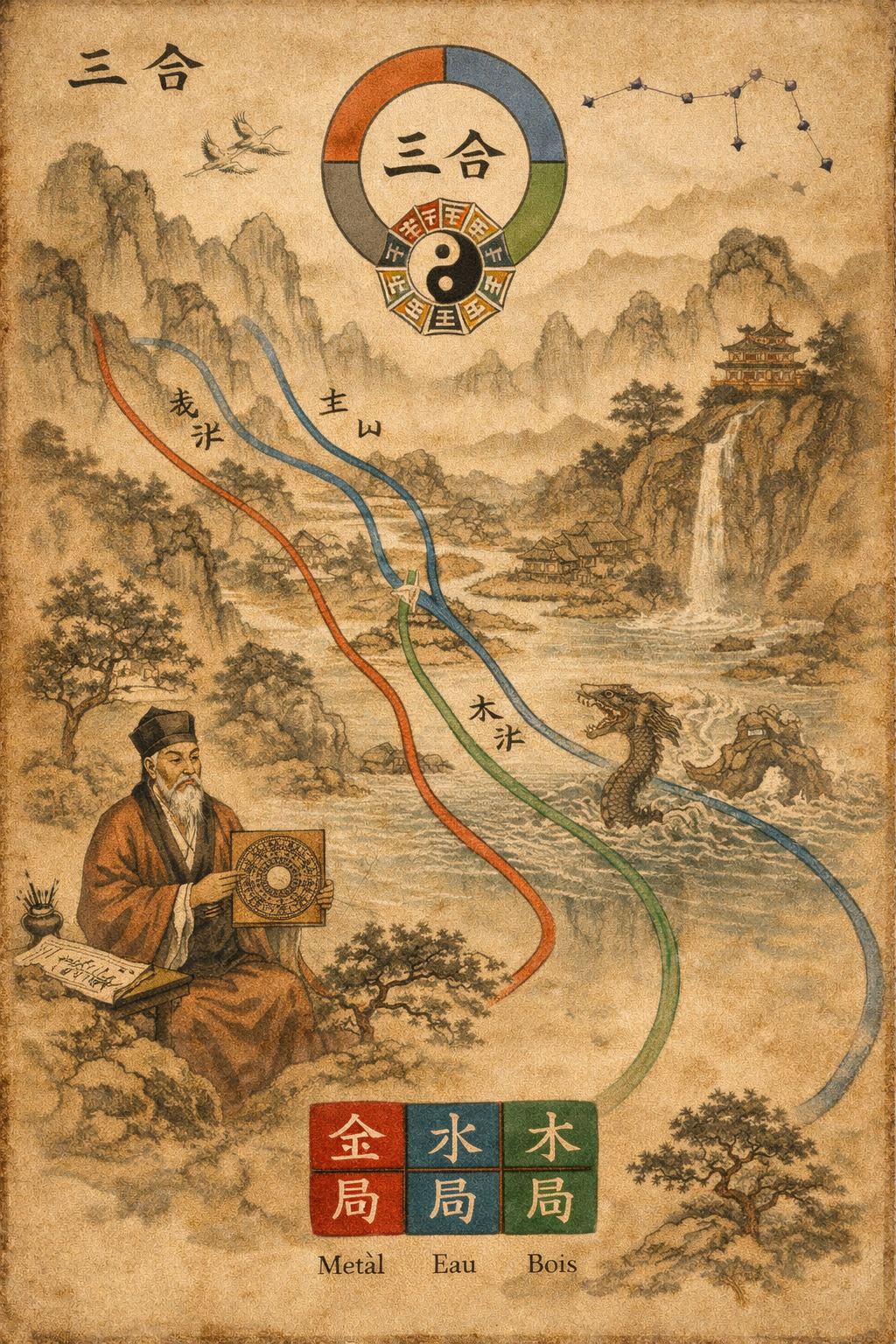
- San He

- Ming Gua

These are what many people today refer to as traditional Chinese Feng Shui.

In parallel, another more popular form gradually developed, arising from imitations, adaptations, and simplifications made outside scholarly circles. This evolution contributed to the emergence of what some now describe as popular Feng Shui, and later, in its modern and globalized form, Western or New Age Feng Shui.


Why are there several types of Feng Shui today ?

It is essential to understand that there is not just one single, uniform form of Feng Shui that is identical everywhere.

Today, we can distinguish at least three major approaches :

1. Yang Gong Feng Shui

This is a lineage-based tradition, still taught in China, particularly in San Liao. This approach is rooted in a classical heritage and places strong emphasis on authentic transmission.

2. Traditional Chinese Feng Shui


This category includes various schools and methods that have become more widely known, such as Ba Zhai, Fei Xing, San He, and Ming Gua. It is the most commonly taught form of Feng Shui in contemporary classical instruction.

3. Western or New Age Feng Shui

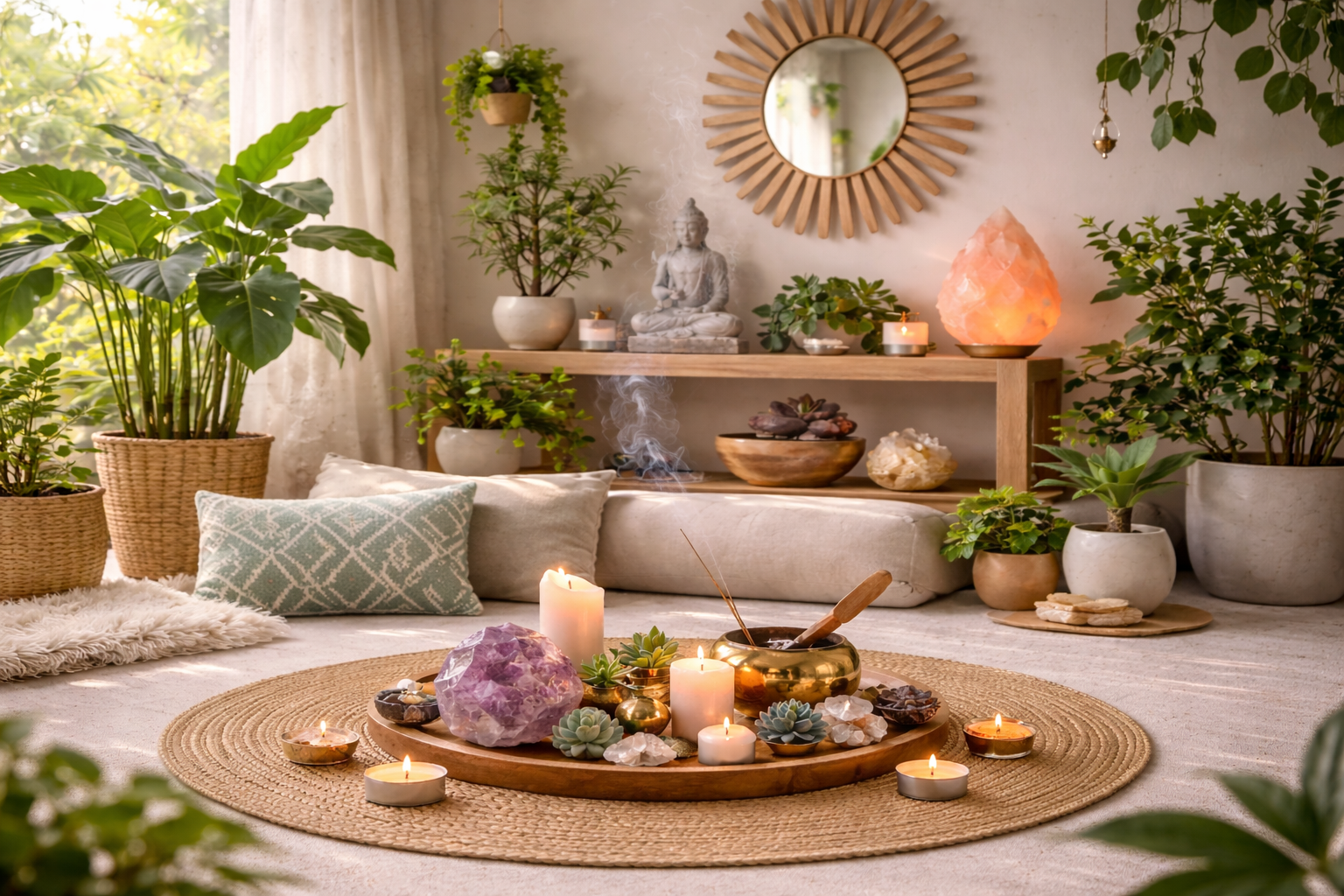
This approach, which is very widespread outside of China, often emphasizes well-being, interior design, symbols, and improving the atmosphere of a space. It sometimes moves significantly away from the historical and geographical foundations of traditional Feng Shui.

Feng Shui Today: Between Tradition, Transmission, and Trend

Today, the term Feng Shui is often used in a very broad sense. It evokes well-being, inner harmony, the circulation of energy, and the arrangement of a calming interior space.

However, this popularization also has its limits.

Through repeated simplification, Feng Shui is sometimes reduced to a decorative trend or a self-development method. Yet in its original tradition, it is a much broader, more rigorous system, deeply rooted in the observation of reality.

Returning to the history of Feng Shui therefore makes it possible to distinguish trends from authentic transmissions, modern adaptations from classical teachings, and popular uses from traditional lineages.

Can Yang Gong Feng Shui Still Be Studied in China ?

Yes. It is still possible to study Yang Gong Feng Shui in China, particularly in San Liao, where certain lineages continue to preserve and transmit this teaching.

In addition, several classical texts are still studied within this framework, including:

- Qing Nang Ao Yu

- Tian Yu Jing

- Yu Che Jing

- Zang Shu

- Yu Han Jing

These works belong to the classical literature associated with traditional Feng Shui and the transmission of Yang Gong Feng Shui.

Returning to the history of Feng Shui therefore makes it possible to distinguish trends from authentic transmissions, modern adaptations from classical teachings, and popular uses from traditional lineages.

Conclusion

The origin of Feng Shui cannot be reduced to a simple definition of “wind and water,” nor to a few interior design tips. Its history is rooted in ancient China, in foundational texts, in the masters of the discipline, in lines of transmission, and in the profound relationship between humans and their environment.

Understanding the role of Guo Pu, the importance of the Zang Shu, the place of Yang Jun Song, and the transmission of Yang Gong Feng Shui helps restore Feng Shui to its true historical depth.

Behind the term that has become popular today, there are in reality several traditions, multiple levels of interpretation, and different ways of practicing. It is this distinction that allows for a better understanding of what Chinese Feng Shui truly is.

Product added to wishlist