




Shopping Cart









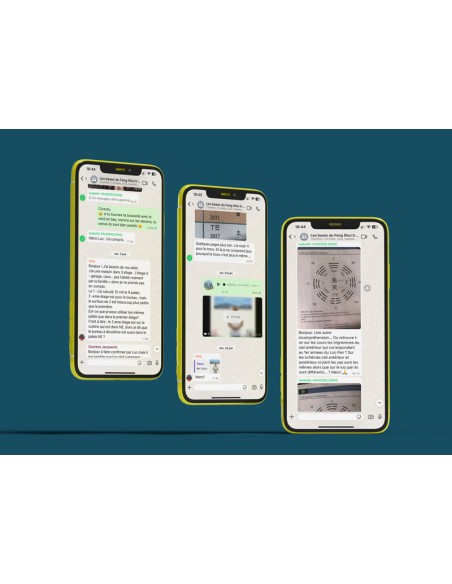

Feng Shui is an ancient discipline that observes the relationship between humans and their environment. Far from the decorative approaches often mistakenly associated with the term, it is an art of observing and balancing energies. This training provides the first essential reference points for understanding the visible and invisible influences that shape our living spaces.
1 000 € for in-person / distance learning and 800 € for E-learning


This five-part introductory course is designed to provide a clear and structured progression: cosmology, the circulation of Qi, landscape analysis, the role of the house, and the place of the individual.
Each theme is explored step by step, enabling participants to immediately experience what they learn by connecting theory with real-world observation.
No prior knowledge is required. The courses combine clear explanations, diagrams, and practical exercises.
In-person sessions take place in a friendly and interactive setting.
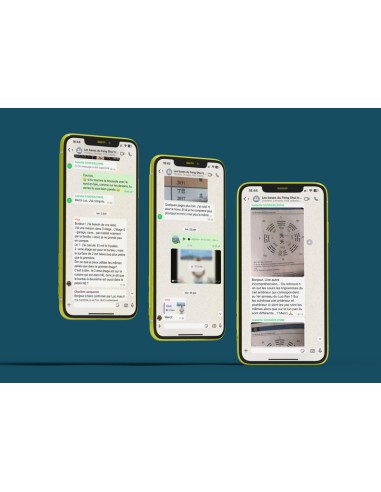
In distance learning (FOAD), live sessions via Zoom ensure an immersive experience comparable to classroom learning, with materials sent in advance.
In e-learning, content is available online for independent study, allowing participants to progress at their own pace.
By the end of these two days, you will be able to:
This foundational course opens the door to advanced pathways such as Ba Zhai, San He, San Yuan, and Yang Gong Feng Shui.

Prerequisites
None
Objectives
Acquire and Master the basics of Feng Shui.
Method and Format
E-learning. In-person, alternating between theory and practice.
Technical Resources
Tables, chairs, visual aids.
Training Location
The training will take place in a venue specially arranged for the occasion.
Training Adaptation and Follow-Up
Continuous follow-up and support will be provided throughout the training. The course can be adapted to address any major difficulties encountered by the learner.
Course Evaluation
Knowledge assessment to verify the level of knowledge acquired by the participants will be conducted as follows: Questionnaire.
Access Delay
A minimum and non-negotiable period of 14 days between registration and access to the training is required.
Needs Assessment
A questionnaire will be provided to analyze the alignment between the participant’s training needs and the courses offered.
Price
1 000 € for in-person/remote training and 800 € for E-learning
Accessibility for Persons with Disabilities
All training courses offered by FENG SHUI TRADITION are accessible to people with disabilities. During registration, we work with the candidate through a questionnaire to determine the measures that can be implemented to support their learning. We may also rely on a network of pre-identified national partners. Contact details of disability partners:
AGEFIPH - Isabelle GRUYELLE
04 74 94 20 21
rhf-ara@agefiph.asso.fr
MDPH - 07 Pôle Astier-Froment BP 606 07007 Privas cedex
04 75 66 97 20
mdph@cg07.fr
Accessibility
In accordance with Article 47 of Law No. 2005-102 of February 11, 2005, and Decree No. 2019-768 of July 24, 2019, this document presents FENG SHUI TRADITION’s policy on digital accessibility.
Digital Accessibility Officer
To ensure the continuous accessibility of digital content, FENG SHUI TRADITION has appointed a Digital Accessibility Officer. Their responsibilities include: Ensuring the implementation of processes to guarantee the accessibility of digital content; Reporting to the Training Manager on the accessibility of content and digital services, as well as any need for improvement; Ensuring that awareness of accessibility requirements is promoted within the organization; Serving as the primary point of contact for all digital accessibility matters.
Training and Awareness Activities
To meet the need for awareness and training for members of FENG SHUI TRADITION, a training plan will be implemented over the next three years. These training sessions will be conducted using the most appropriate method to suit the specific requirements of each course, either through synchronous or asynchronous distance learning, or through in-person sessions.
Best Practices Guide
To ensure that accessibility is systematically considered in the creation of content and the implementation of digital services as part of quality standards, each department will integrate accessibility best practices tailored to its content and tools. These adaptations will be based on the experiences gained during our training sessions.
Duration: 1 hour and 45 minutes
Objective: Understand the definition and the main principles of Feng Shui
Chapter 1: Definitions
Chapter 2: Origins
Chapter 3: Ethics and philosophy of Feng Shui
Chapter 4: Identifying the most beneficial energies in one’s environment
Chapter 5: Qi
Chapter 6: Analysis systems
… Module 1 Assessment
Duration: 1 hour and 45 minutes
Objective: Master the concept of cosmology in Feng Shui
Chapter 1: The Cosmic Trinity
Chapter 2: Wu Chi – Tai Chi – Yin and Yang
Chapter 3: Ba Gua
Chapter 4: Wu Xing 五行 – The Five Elements
Chapter 5: Former Heaven – Later Heaven
Chapter 6: The 24 Mountains
… Module 2 Assessment
Duration: 1 hour and 45 minutes
Objective: Master the methods and principles of Feng Shui
Chapter 1: Beneficial Qi and Harmful Qi
Chapter 2: The Natural Order of Things
Chapter 3: The Four Aspects of Feng Shui
Chapter 4: Location and Direction
Chapter 5: Measurement with the Luo Pan
… Module 3 Assessment
Duration: 1 hour and 45 minutes
Objective: Master the concept of landscape in Feng Shui
Chapter 1: San He
Chapter 2: The Dragon’s Nest
Chapter 3: Mountains and Embracing Forms
Chapter 4: Cities
Chapter 5: The Four Celestial Animals
… Module 4 Assessment
Duration: 3 hours
Objective: Master the concept of the home in Feng Shui
Chapter 1: Structures
Chapter 2: Layout and Arrangement
Chapter 3: Energy Entry into the Home
… Module 5 Assessment
Duration: 4 hours
Objective: Master the principles of Feng Shui application
Chapter 1: Ba Zhai
Chapter 2: The Eight Trigrams
Chapter 3: Gua Numbers
Chapter 4: The Eight Types of Qi – Explanation
Chapter 5: Ba Zhai – Principles of Application
Chapter 6: The Small Tai Ji
Chapter 7: Impact on Sectors
Chapter 8: Principles of Elemental Opposition
Chapter 9: Effects of Element Removal
Chapter 10: Case Study: Analysis of Real-Life Examples
… Module 6 Assessment