Location and Direction

Location and Direction

In Traditional Feng Shui, Location and Orientation Are Two Completely Different Things

In traditional Feng Shui, several factors must be considered to properly distinguish location from orientation. First the location tells us where we are and second the orientation tells us which way we are facing.

The location in Traditional Feng Shui

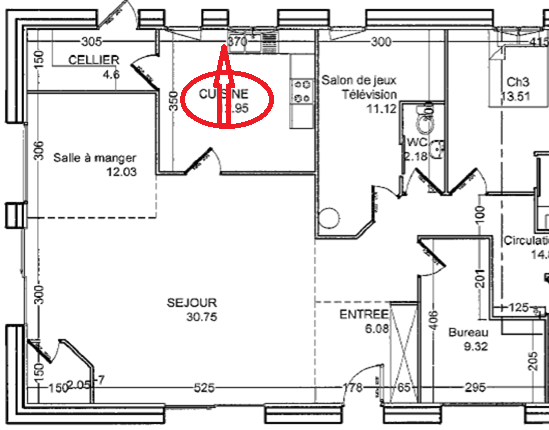
The sectors correspond to the location, the “palaces” of our house, apartment, or even the company where we work. When you divide your living space into nine equal sectors, this defines your location or palace. You have nine possible locations: North, Northeast, East, Southeast, South, Southwest, West, Northwest And the center, which we call the Heavenly Heart. Depending on your location, these sectors can be beneficial or harmful. Consequently, you will know where to position yourself to take advantage of positive energies.

The direction in Traditional Feng Shui

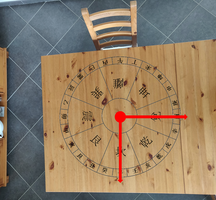
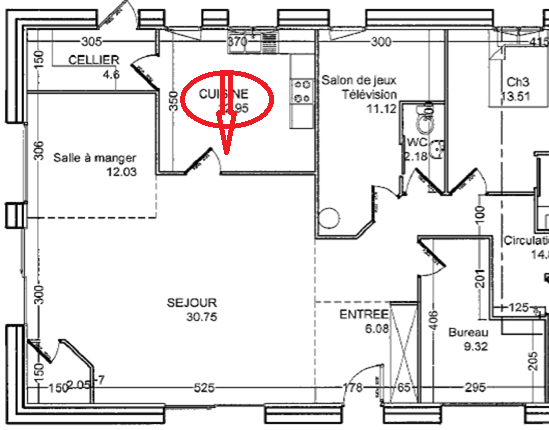
What you are looking at is the orientation. It is measured with the Luo Pan in degrees, which indicates the direction of your gaze. For example, if you are looking at 348°, you are oriented toward N1. The measurement is further recognized by a mountain: N1, N2, N3, or SE1, or NW2, and so on. There are 24 possible orientations, which is why we call them the 24 mountains. If you tell me that you are facing north, that means nothing in traditional Feng Shui, because we always refer to the 24 mountains. You must specify the orientation as N1, N2, or N3. This is what makes all the difference.


Location and direction

It is therefore possible to be in the kitchen, which is located in the West sector of your house, while your gaze is oriented toward Southeast 3 (SE3). SE3 lies between 142.5° and 157.5°. If you move around the kitchen table, you will still be in the same sector—the West sector of your house—but your gaze could now be toward Northwest 3 (NW3), or even Southwest 3 (SW3). You might ask, “So what?”—well, it changes everything. If you belong to the East Group, the directions NW3 and SW3 will be beneficial for you, but SE3 will not. If you belong to the West Group, it is the opposite. So, as you can see, sector and orientation are not the same thing.

In conclusion

I know that some people think or say that “facing west is good for people of the West Group.” Be careful—that is incorrect. Only West 2 (W2) is beneficial as a direction. In traditional Feng Shui, if I say “I face west,” west is a sector, not a direction. It is more precise to say, “I face West 3,” so we know that you are looking between 277.5° and 292.5°. From now on, you should say: “My desk faces East 2” rather than “My desk faces East.”

Product added to wishlist